
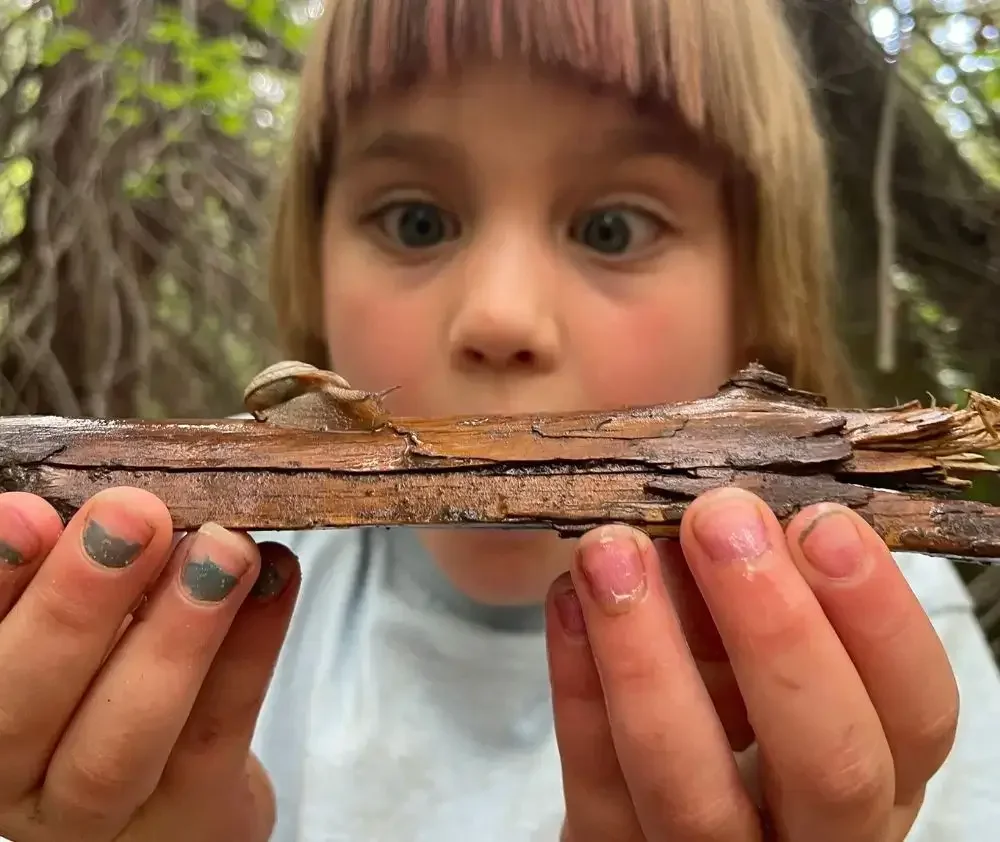
Snails are strange creatures, to say the least, but they are also extraordinary. Often overlooked and misunderstood, the life of a snail is one to take notice of. These alien-like, slimy, shelled creatures have a knack for looking rather gross depending on your perspective. Sometimes these rascals even devour entire vegetable gardens, giving them quite a bad reputation. Although snails are very bizarre organisms, there is a lot more going on in their little world than what meets the eye.
Over the years, snails have become an increasingly special part of Walking Mountains programs. During the summer months, hundreds of campers have the opportunity to interact with these small and slimy creatures. Looks of excitement, perplexity, and disgust are all common responses when kids find a snail near one of our trails. Aided by their exceptionally curious minds, campers are eager to learn about and befriend as many snails as they can find!
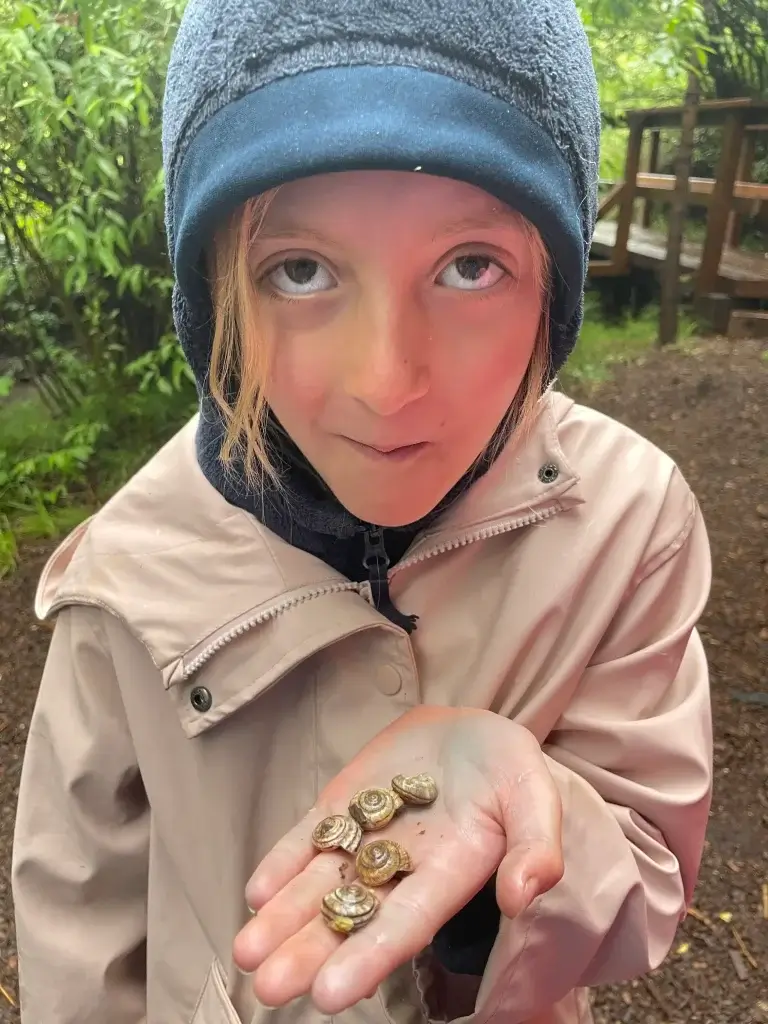
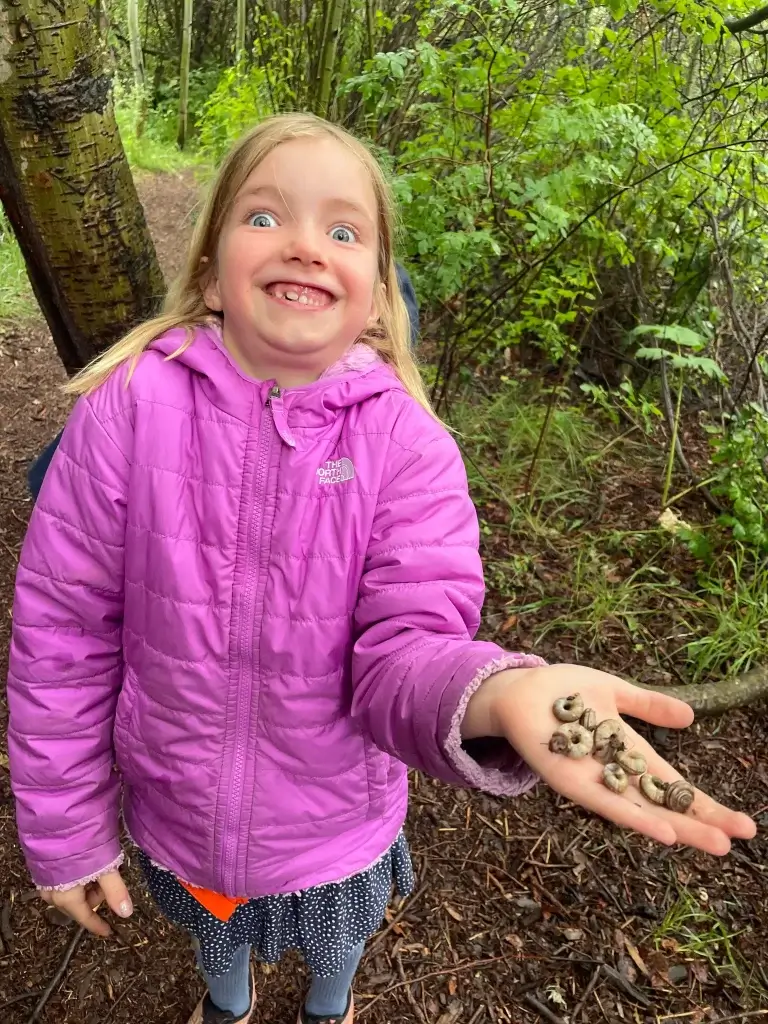
Snails experience the planet much differently than humans. Although their experience is different, it does not make it inferior to ours. It is simply just different. While humans rely heavily on our senses of sight and hearing, snails rely mostly on their sense of smell. They detect food, predators, and other snails by smelling with their two smaller tentacles on their head. Snails also have smelling receptors on their mouth and all over their body! In addition to their two smaller tentacles, snails have two larger tentacles on top of their head that house their eyeballs. They are for seeing in shades of near-sighted black, white, and grey. This means that snails are color blind and have really poor eyesight. For such a laid-back and sedentary lifestyle, being color blind isn’t all that bad. In addition, snails cannot hear because they do not have ears! Maybe it’s for the better, maybe it’s for the worse, but even though they won’t be able to hear you talking, they are very sensitive to vibrations. In fact, if you find a snail, many people don’t know that humming to it is a great way to become its friend. By humming gently, you are creating small vibrations that the snail will feel, and if it happens to be sleeping, those vibrations are a lovely way to help it wake up and peep out of its shell to see what’s going on.
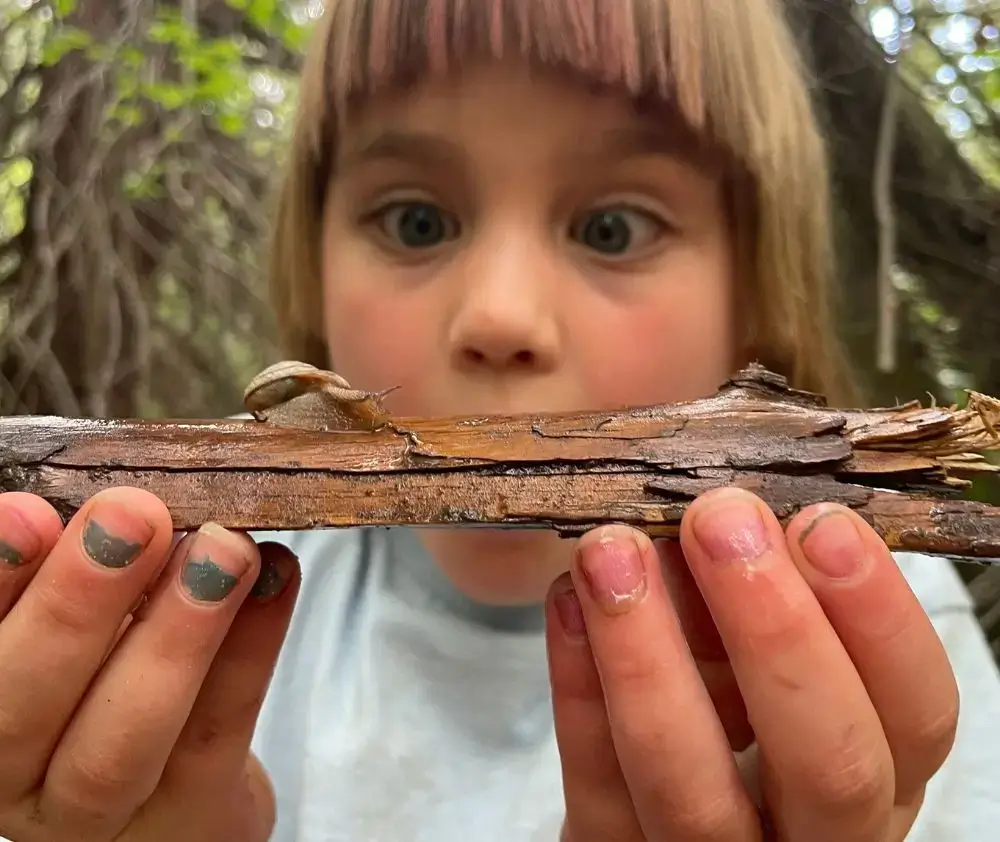
Here at Walking Mountains, the most abundant snail species is the Rocky Mountain Snail. If you choose to take a walk on our trails, look on the forest floor in the morning or after it has rained. There will likely be hundreds of little snails crawling about, looking for yummy plants and mushrooms to munch on. During summer camp and school programs, we teach students that snails are decomposers, otherwise known as nature’s garbage disposal. Believe it or not, snails are an essential component of the food web, especially here in Colorado! Through fun games, skits, and guided exploration, our students realize that snails will eat almost anything, from dead plants and animals to fungus and flowers, to fruits and vegetables. The kids often go home with snail-themed artwork telling their parents how much they want to go outside and find more snails in their own backyards!
It is my hope that this short article has inspired you to be open to forming your own story with a snail, just like the students who come to Walking Mountains. I encourage you to try and see snails through a different lens, a lens that seeks to understand rather than hate, one that seeks to appreciate rather than fear. You never know; there just might be a lucky snail out there waiting to hear you hum.
Written by Mitchell Smith. Mitchell Smith is a Walking Mountains Foley Graduate fellow and is excited about all things snails! He enjoys being outside, especially when it involves playing soccer, paddle-boarding, or hiking. He loves ice cream any time of the year and has a pet snail named Shelldon, along with a new pet snake named Eliasss