
School Programs
At Walking Mountains Science Center, science is an adventure you can touch, see, and explore!
Our hands-on programs take students from the classroom to the creek, the trails, and beyond, turning every lesson into an exciting discovery. From K‑8 field trips that bring science to life, to after-school STEM challenges, Girls in Science programs, and summer camps bursting with curiosity, we spark wonder and ignite a love of learning in every corner of our valley. Whether uncovering tiny critters in a mountain stream or experimenting with the latest hands-on tech, students don’t just learn science — they experience it. At Walking Mountains, we’re building confident, curious environmental heroes… and having a ton of fun along the way!
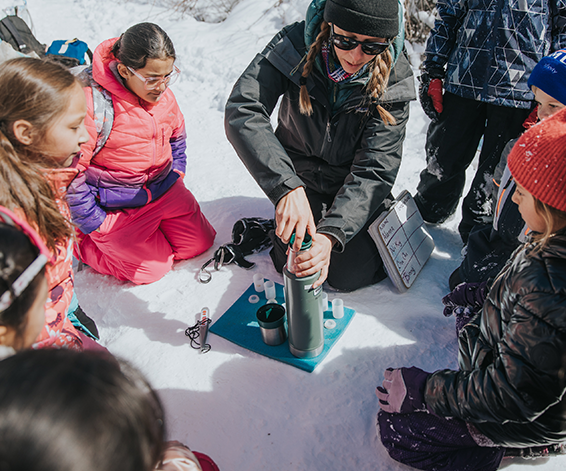
More than a field trip
Our school programs are outdoor learning experiences that provide students with the opportunity to practice detailed scientific observation, study real-world phenomena, work together as a team, and gain greater connection to the natural world in which they live. Course topics can range from geology and sustainable energy to climate and the hydrosphere.
Our graduate fellows work closely with our Youth Programs Director and teachers to ensure that field science curricula is aligned with national, state and district standards in language arts, math, and science and our multidisciplinary, experiential approach engages students by accommodating multiple learning styles.
Working in conjunction with the local school district and private schools, Walking Mountains serves students in Eagle County and beyond through natural science field trips that take place in nature, complement classroom curriculum, and narrows the achievement gap by enhancing scientific and environmental literacy.
forms & teacher resources
Here you will find all of the teacher materials that are necessary when planning your field science program including virtual pre-visits, med forms, field group lists, parent letters, and chaperone letters. These materials will also be sent in your confirmation email sent two weeks prior to your program. However, having access to the materials online will allow you to plan and prepare for your field science program on a schedule and timeline that is most convenient for you.
forms for participation
virtual pre-visit videos
Cold weather programs
warm weather programs
Questions?
Please contact School Programs Manager, Dustin Hall for more
information about field science programs at (970) 827-9725 x138.
School Program FAQs
Nature’s Needs
Students will have the opportunity to use their scientific skills to discover nature’s different needs! Students will investigate the needs of plants, animals, and humans and examine where they go if they cannot find what they need to survive.
Next Generation State Science Standards
Weather…You are Ready or Not!
Ready or not, weather is coming! Students will have an opportunity to learn about weather and how to be prepared for a day of outdoor learning! Throughout the program, students will investigate the sun’s role in our changing weather, connect weather with seasons, and explore ways that humans can prepare for the weather, even when it is severe.
Next Generation State Science Standards
K-PS3-1: Make observations to determine the effect of sunlight on Earth’s surface.
K-ESS2-1: Use and share observation of local weather conditions to describe patterns over time.
Astonishing Adaptations
Through hands-on exploration of animal skulls and fur, students will learn different adaptations that help animals survive and thrive in their environment. Students will identify how some of these adaptations even inspired the creation of tools that humans use today!
Next Generation State Science Standards
Making Waves: Light and Sound
Students will use their five senses to investigate light and sound waves. Through hands-on experiments and exploration, students will learn how living beings can use light and sound to thrive and survive. Students will be making waves as they use vibrations to play instruments and communicate!
Next Generation State Science Standards
A Thistle & A Bee: The Story of Plant & Animal Interdependency
Students will explore the diversity of life throughout different habitats while making observations of the relationships between plants and animals required for growth and survival. While exploring three different habitats, students will identify plant and animal needs, understand their interdependence, and discuss how humans have an impact on living things and their habitat.
Next Generation State Science Standards
The Power of Water
Students will examine how the power of water is a driving force in changing the shape of the land. While exploring and experimenting, students will examine how water changes in the water cycle, discover where water is found on Earth, and learn how water impacts the land. Students will also construct models to investigate ways to prevent the impacts of water-related natural disasters and design models to mitigate the effects of these disasters.
Next Generation State Science Standards
2-ESS2-2: Develop a model to represent the shapes and kinds of land and bodies of water in an area.
Climate Curiosities
Curious about climate? In this program, students will engage in hands-on activities examining Colorado’s climate. Students will identify the differences between climate and weather, while exploring various natural hazards like avalanches and extreme cold.
Next Generation State Science Standards
3-ESS2-2: Obtain and combine information to describe climates in different regions of the world.
Finding the Fittest Flyers
Students will engage in hands-on activities that help them understand that animals have unique characteristics and life cycles. Students will learn that these unique abilities help them interact with and survive in their specific environment.
Next Generation State Science Standards
3-LS3-2. Use evidence to support the explanation that traits can be influenced by the environment.
3-LS2-1: Construct an argument that some animals form groups that help members survive.
Fun with Fossils
In this in-school program, students will examine fossils to discover what they can tell us about organisms that lived long ago. Students will transform into paleontologists and learn about how some of these organisms still look like organisms living today.
Next Generation State Science Standards
Earth’s Changing Landscape
Students will travel back in time to explore how Colorado’s landscape has changed over time, while uncovering the mystery of how Earth’s major systems can interact to influence the current shape of our landscape. In addition, students will use inquiry during a fossil exploration to investigate some of Colorado’s ancient organisms. From reading the rock layers to reading maps, students will learn the story of Colorado’s prehistoric environments and gain an understanding of how the landscape is continuing to change today.
Next Generation State Science Standards
4-ESS2-2: Analyze and interpret data from maps to describe patterns of Earth’s feature.
Sustainable Energy
Students will experiment with energy while engaging in hands-on engineering projects to learn about the advantages and disadvantages of wind, solar, and hydro energy. Students will identify types of energy, witness the Law of Conservation of Energy, and engage in critical thinking skills as they compare and contrast renewable and nonrenewable energy sources.
Next Generation State Science Standards
Energy in the Ecosystem
Students will explore an ecosystem while observing energy cycling through different trophic levels. Students will learn how living and nonliving components interact and depend upon one another to maintain a healthy ecosystem. Students will further investigate ecological cycling by learning about the importance of the carbon and nitrogen cycles.
Next Generation State Science Standards
At Home in the Hydrosphere
Students will examine how climate change is impacting the hydrosphere and its cascading effects on earth’s major systems (biosphere, atmosphere, and geosphere). Students will investigate how our changing climate is affecting water availability in the mountains and tackle the current issue of how communities can protect this precious resource.
Next Generation State Science Standards
Weather & Climate
Students will learn how weather systems interact to shape Colorado’s continental climate. Through hands-on investigation of snowpack, students will discover how our changing climate is affecting winter and natural hazards in Colorado. Students will explore how humans are impacting and being impacted by climate change.
Next Generation State Science Standards
Ecology: Biodiversity Research
Students participate in hands-on field research protocols as they explore the interactions within an ecological community. By conducting a biophysical monitoring project, students will have the opportunity to investigate and compare the diversity between two unique ecosystems.
Next Generation State Science Standards
Geology
Students will investigate the natural constructive and destructive processes that shape the Earth’s landscape. Students will explore content such as tectonic plate interactions, chemical and physical weathering, erosion, deposition, and stream dynamics.
Next Generation State Science Standards
Ancient Geology: Written in Stone
Students will learn to read rock layers while exploring the McCoy Fossil Beds unearthing evidence of the previous environments and the organisms found in Colorado thousands of years ago. Students will also have the opportunity to investigate the major geologic events that are responsible for the changing landscape.
Next Generation State Science Standards
From Our Blog
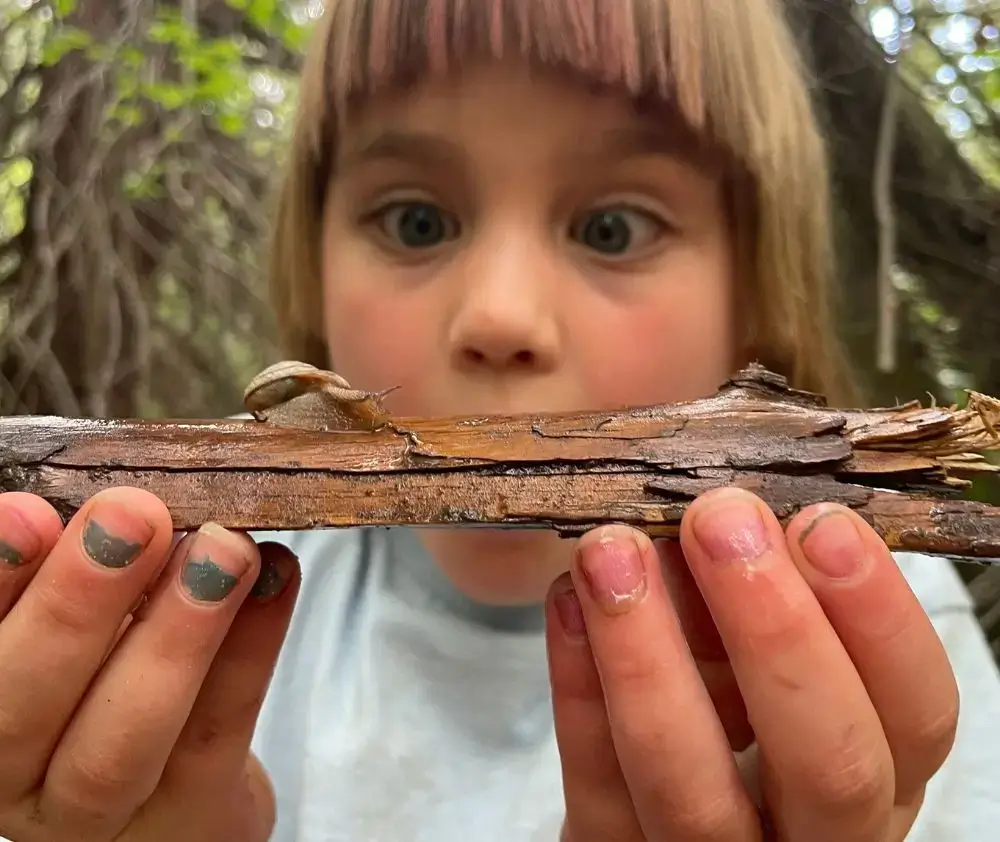
The Slimy Snail World


Finding Their Flock: Meet the New Foley Graduate Fellows
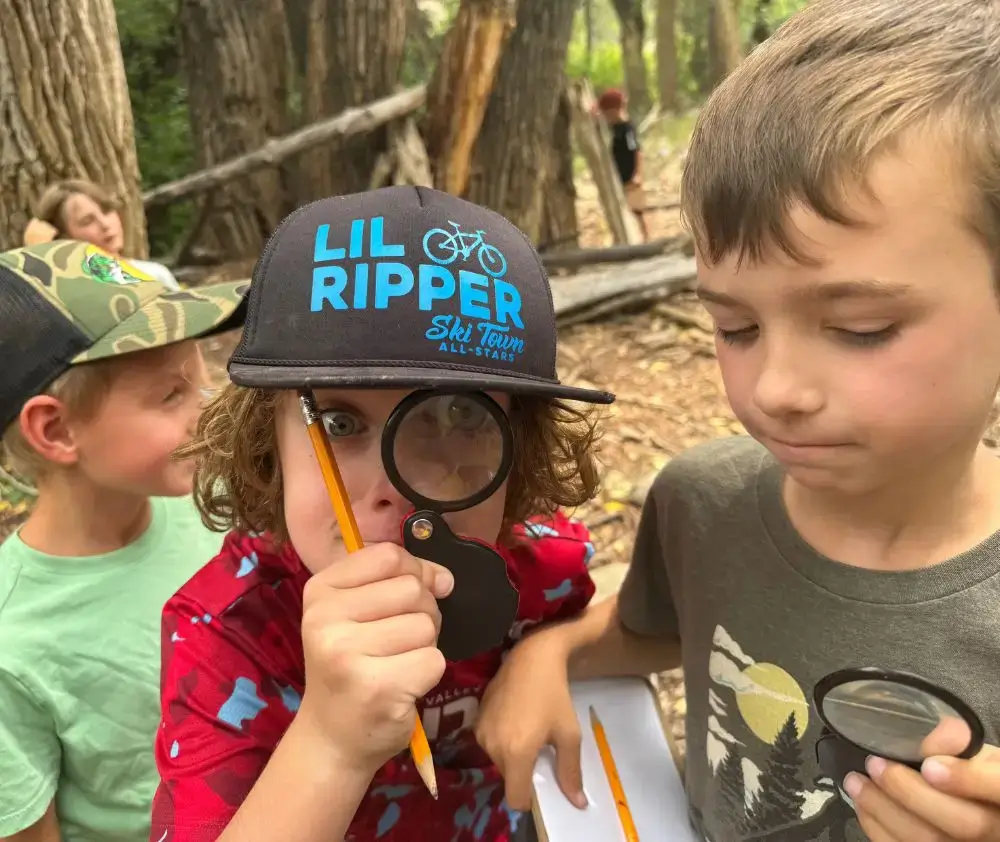
Engaging Kids’ Senses in Nature