
Engaging the senses is a tool for kids to develop curiosity, learn more about their environments, and regulate their nervous systems. Summer camp at Walking Mountains is a wonderful setting for kids to practice using all five of their senses: sight, hearing, smell, taste, and touch. As a graduate fellow and educator, Alli incorporates sense activities with campers all throughout the camp day. These are some of her favorites that you can do at home too!
Sight: Furthest, Closest, Biggest, Smallest
When campers are in a new place or reach a beautiful view, taking intentional time to notice the things they can see helps moments feel more meaningful. Campers in Alli’s groups often do an activity called “Furthest, Closest, Biggest, Smallest.” Each kid points to the furthest thing they can see. As a group, they decide which object is actually the furthest. Repeat for closest, biggest, and smallest objects. This is a great opportunity to use tools like hand lenses and binoculars. After the game, the kids reflect on what makes the place they’re in so special.
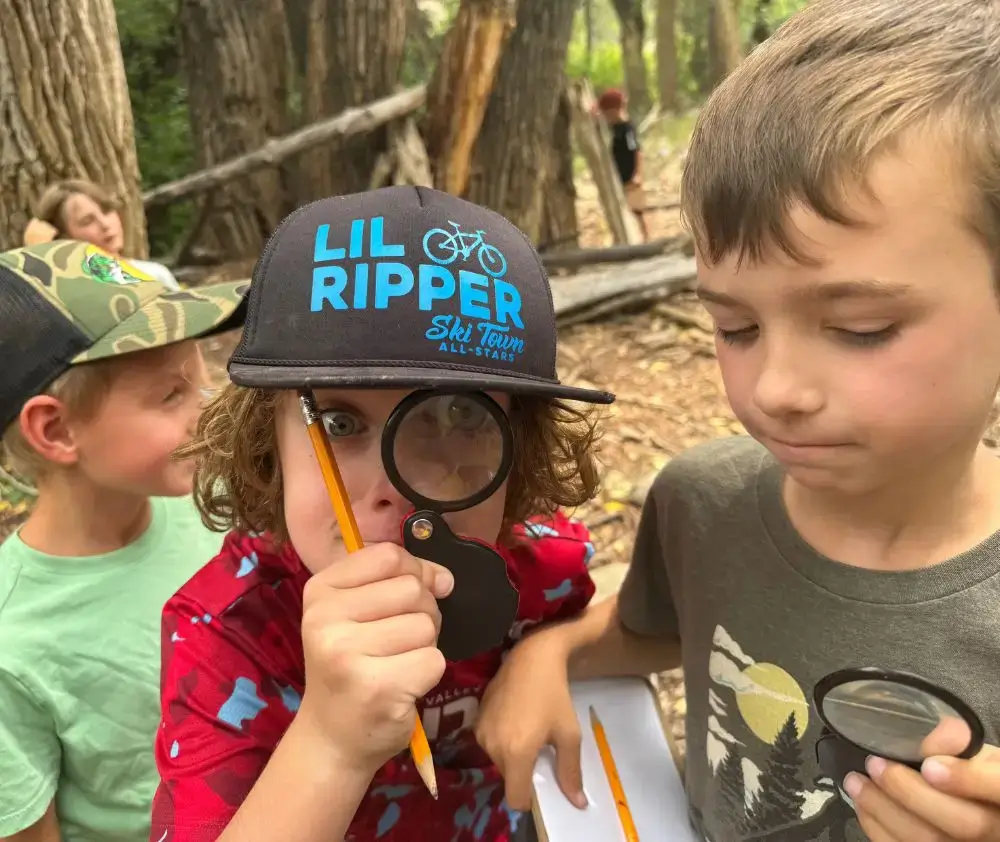
Kids finding the smallest things.
Hearing: Silence and Echoes
Quiet moments can help kids observe who is in a space and all the different noises nature makes. “Silence and Echoes,” is a great activity to do on a hike, allowing kids to explore noises in different locations. To play, the entire group spends 30 seconds in silence. Afterwards, the kids share their discoveries by making a list of all the sounds they heard. Then, they test for echoes by yelling “ECHO” in unison as loud as they can. After testing different locations, they can compare and contrast what sounds make places unique.

Campers on top of Shrine Ridge – a great place to listen to sounds and make noises.
Smell: What’s That Smell?
Taking a deep breath helps kids regulate their nervous systems and can invoke feelings of calm. In a place with many plants, a guessing game called “What’s That Smell?” is an easy trail game. To play, pick one leaf of a fragrant plant like mint, sagebrush, or pinon pine. Invite the kids to close their eyes and smell the leaf of the secret plant. Then, as they continue walking, they can search to find a plant that smells the same.
Taste: Pine Needle Tea
Tasting plants can be a memorable experience for kids and can create moments of gratitude for plants. Campers at Walking Mountains sometimes make tea out of spruce needles to experience the tastes of nature. The kids make observations about which trees are healthy and abundant, and then they pick a small handful of needles from them. The needles are steeped in a thermos of hot water. While waiting for the tea to brew, kids can reflect on the reciprocal relationships between humans and trees. They round out the experience by thanking the trees by engaging in an act of care that they feel would help the tree.
Touch: Dirt In A Bag
In a summer camp about little worlds, campers spent a whole day observing dirt. To observe dirt closely, they played a game called “Dirt In A Bag”. To play this game, each kid (or group of kids ) needs a small bag. The person facilitating calls out different prompts related to how dirt might feel. Each group gets one minute to find dirt around them that meets the description, and they add a handful to a clear bag or jar. Consider the following prompts:
- Wet soil
- Dry soil
- Sandy soil
- Smooth soil
- Soil that has lots of chunks, rocks, or leaves in it
- Soil that is packed down tight
- Soil that could blow away
Once their bag/jar is full, the kids can observe the dirt. Ask them questions to reflect on their findings: What do they notice about the dirt they collected? How are the different layers interacting? What do they think makes each handful of dirt the way it is? Why is dirt important? At the end, they return the dirt back to where it was found.
There are so many small ways to help kids engage their senses. Senses activities allow kids to discover more about the places they are in, connect with their environments more deeply, and develop transferable skills for self regulation. Try some of these activities the next time you’re outside with youth, or even practice them as an adult. Engaging the senses is beneficial for all ages!
Written by Alli Menendez. Alli is a Walking Mountains Foley Graduate fellow who is passionate about connecting children to nature. When she’s not working with youth, she likes to go for runs (stopping lots to notice plants) or relax on one of her many favorite rocks around Avon.