National Kite Flying Day is celebrated annually on February 8. It is a day to step into the great outdoors, feel the winter breeze, and connect with nature through the simple beauty of flying colorful banners. Kites have been flown for centuries, but it’s unclear where the colorful kites we know today first originated from. Many historians believe the first kite flew in 5th century BC China, piloted by philosophers Mozi and Lu Ban. Kites have strong ties to cultures in Malaysia, Indonesia, and the South Pacific as fishing instruments made of natural materials like leaves and reeds. These models took advantage of the wind to position fishing bait far out to sea. By the 13th century, kite flying had become a popular pastime, as well as colorful expressions of diverse cultural heritage.

📷 Licensed from Adobe Stock
The philosophers who flew the first kite so long ago drew their inspiration for the invention after witnessing a group of raptors harness the wind to hover in the air. Kites are acrobatic birds of prey that use the same principles to lift off of the ground as the toy that was named after them. Instead of flapping their wings to propel themselves forward, kites take advantage of our most fundamental laws of nature, Newton’s laws of motion. As they hover, kites tilt their wings backwards at a precise angle to change the momentum of the wind in order to lift themselves forward. Kites can change course so swiftly in the air because they use their tails similar to the rudder of a boat. By twisting and tilting their tail mid-air, this allows the bird to gracefully dive and swoop, known as “kiting”, in the air in search of prey. Toy kites are an ingenious design of biomimicry, or the idea that we can look to the natural world to create new inventions or ideas. Just as the bird inspired philosophers of ancient China, other innovations such as Velcro, wind turbines and even bullet trains are examples of biomimicry. The adaptations of animals around us continue to inspire engineers today.
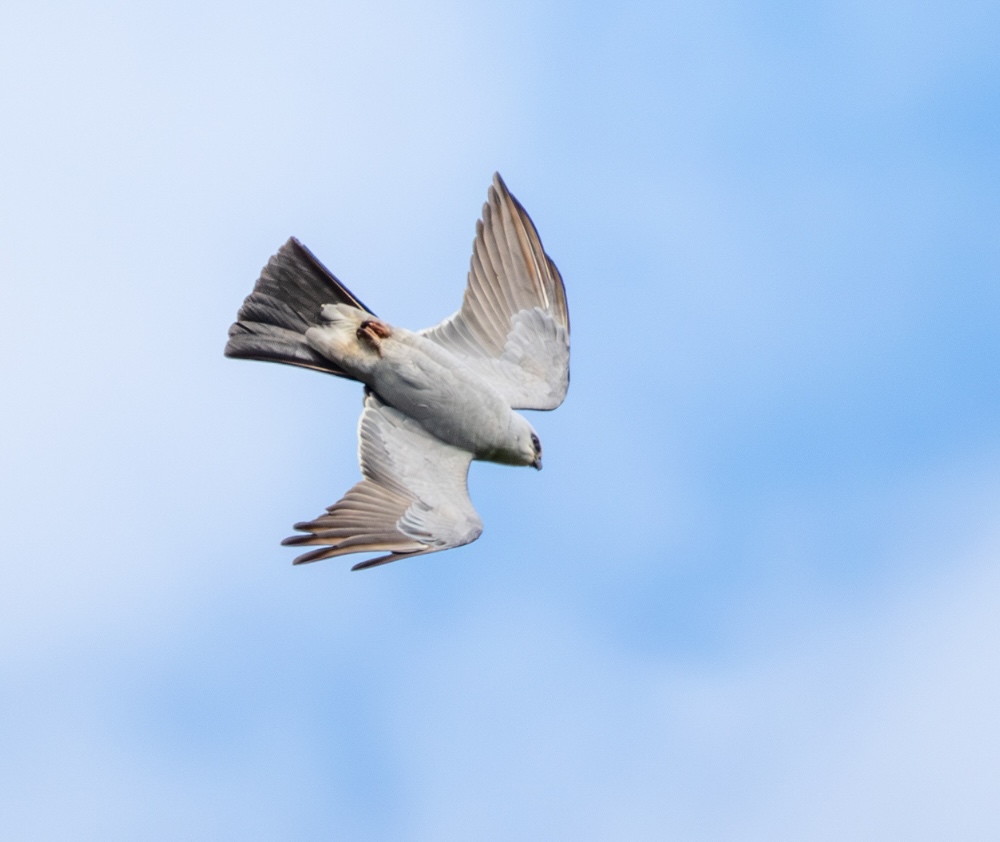
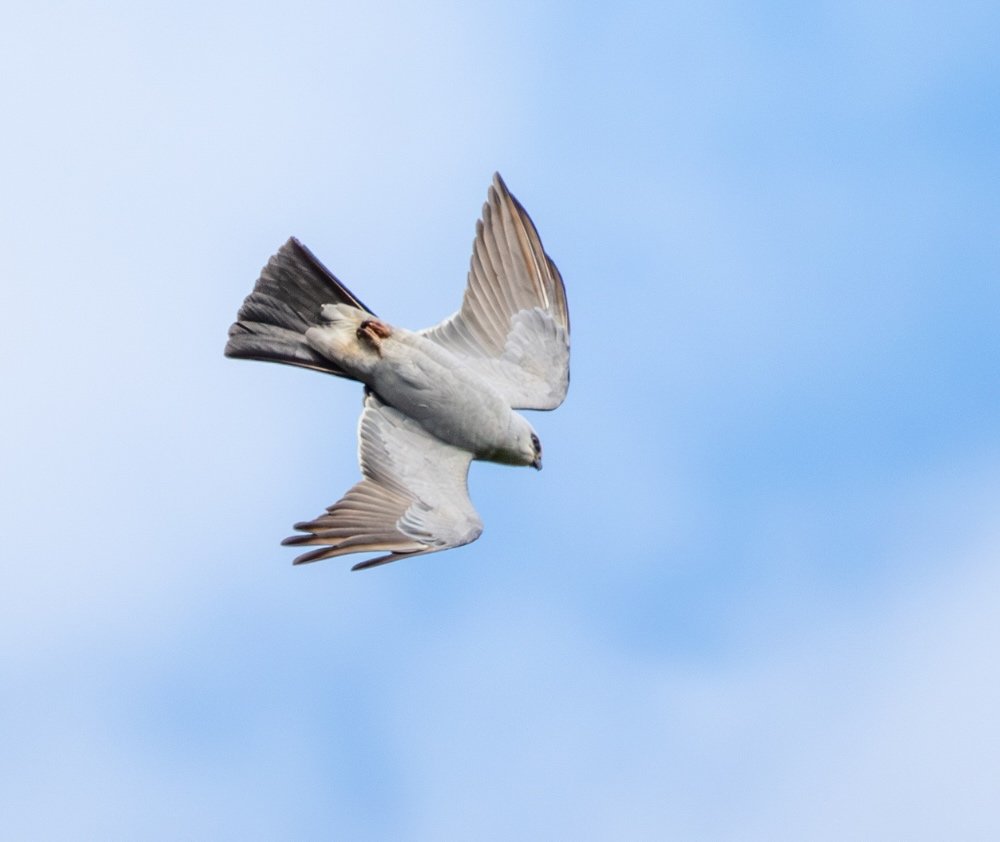
The wing shape of a kite, like this Mississippi Kite, helps them maneuver quickly in tight spaces to catch their small prey. 📷 Licensed from Adobe Stock
Kites (the birds) belong to the family Accipitridae, along with raptors such as the Cooper’s Hawk. These birds of prey can hunt in tight spaces like forests because they have short wings and tails. This allows them to maneuver quickly and gives them the reputation as the “jet fighters” of the raptors. Colorado’s native species is the Mississippi Kite. They migrate north from South America to the eastern region of Colorado to raise their young in open country. Kite parents meticulously raise their fledglings in the summer for about two months, teaching their young to swoop, dive, hunt, and soar on air thermals. Hot air warmed from the sun rises up into the atmosphere, allowing raptors to ride the currents and gain altitude. Exceptional eyesight equips these birds to hunt small prey while soaring above the treetops. Mississippi Kites eat a specialized diet of flying insects and occasionally eat small mammals and reptiles. These birds snatch insects mid-air, swooping down to catch them with their sharp, bright yellow talons and often consuming their prey without ever landing.
This February 8, take inspiration from these feathered masters of the wind. Whether your kite is an intricate model or a simple diamond shape, they are examples of perfectly executed biomimicry. Grab a spool of string, find an open field, and wait for that perfect gust.
Meridith Carley is a current Naturalist at Walking Mountains and she has been working as an environmental educator for three years. She has previously taught on Nantucket Island and in Savannah, GA educating all ages about the plants and animals of each unique ecosystem. Her favorite flier is the Great Egret.