In Eagle County, many of us spend our time looking up toward mountain peaks, sunsets, or circling hawks, but some of the most fascinating parts of Colorado’s story lie beneath our feet. Rocks are foundational to life, yet often go unnoticed. As rocks break down, they release minerals into the soil, and these mineral nutrients feed plants, which in turn support entire ecosystems.
Rocks are also stunning in their own right. According to Mathews, Keller-Lynn, and Fox (2003), Colorado is home to over 774 identified mineral types, making our state notable for its mineralogical diversity. Across Colorado, certain minerals form in rare combinations of color, clarity, and structure. These are known as gemstones, and our state is full of them. Approximately 30 varieties of gemstones have been identified in the state, including smoky quartz, amazonite, and topaz (Colorado Geological Survey).
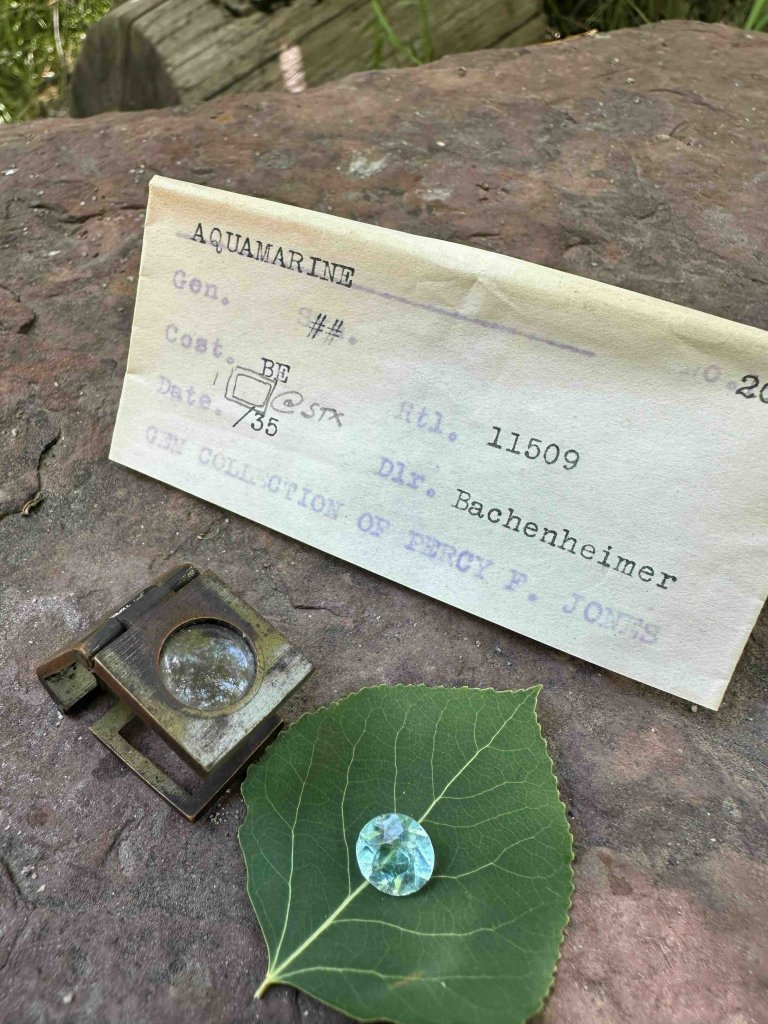
Aquamarine sample from Walking Mountains.
📷 Tayler Branson
A gemstone is more than just an aesthetically pleasing mineral. According to Geology In (2016), a gemstone is a naturally occurring, inorganic material with a defined chemical structure. What makes it a gemstone is its combination of rarity, durability, and beauty (often a matter of subjective opinion). Many gemstones are cut and polished for use in jewelry, while others are valued for their scientific or collector significance.
Colorado’s official state gemstone is aquamarine, a cool-toned crystal found high in the mountains, especially near Mount Antero. These stones form in “pegmatites, coarse-grained igneous rocks, and are prized for their clarity and light blue hue (Colorado Geological Survey).”

Sample of rhodochrosite. 📷 Licensed from Adobe Stock
Rhodochrosite, Colorado’s state mineral, sparks debate among collectors over whether it should be classified as a true gemstone or simply a stunning mineral. Found in deep red to pink rhombic crystals, rhodochrosite is visually striking but softer than traditional gemstones, which limits its use in jewelry. One of the world’s largest rhodochrosite crystals, the Alma King, was discovered in Park County, CO, and now resides at the Denver Museum of Nature & Science.
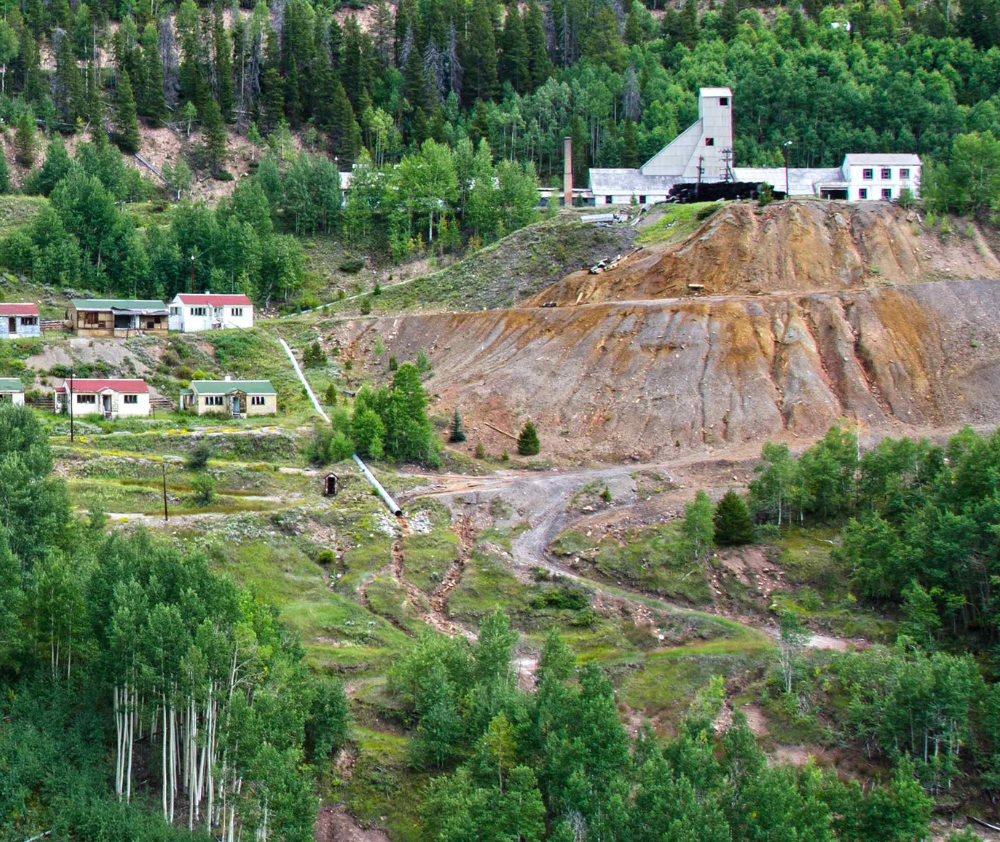
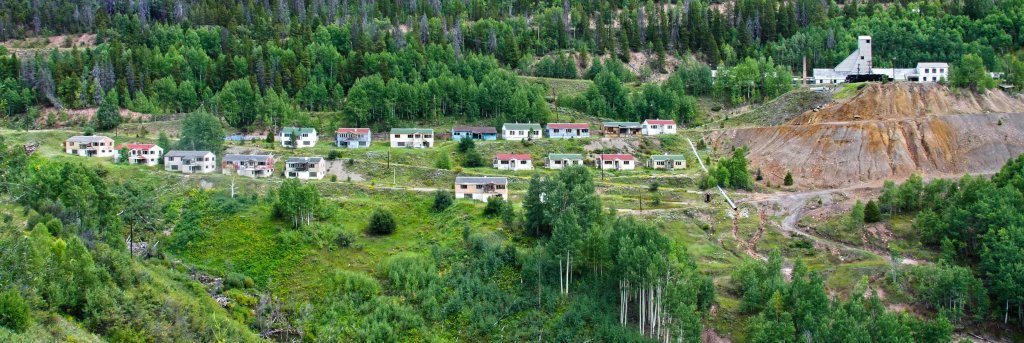
Rhodochrosite also has local ties. The now-abandoned Eagle Mine near Gilman, just outside Minturn, once produced rhodochrosite alongside other valuable minerals. However, the mine’s operations led to heavy water pollution of the Eagle River, resulting in its 1986 designation as a federal Superfund site. The Eagle Mine serves as a perpetual reminder of the complex relationship between natural resource extraction and environmental impact throughout Colorado’s history.
📷 Licensed from Adobe Stock
The Colorado Mineral Belt, an area of mineral-rich rock that stretches from the San Juan Mountains to Boulder, has significantly shaped Colorado’s economy, culture, and geology. Once driven by gold, silver, and molybdenum mining, this region now also attracts rockhounds and amateur geologists searching for colorful quartz crystals and other rare formations.
While collecting rocks can be a fun and educational hobby, it’s essential to research and follow guidelines to minimize environmental impact. Some areas permit limited collection, while others are protected due to safety or conservation concerns. Whether you’re a casual rockhound or a serious collector, Colorado’s rocks and gemstones hold evidence of the Earth’s inner workings and reminders that the ground beneath us is always changing, always revealing something new.
Tayler Branson is a recent graduate of the Foley Fellowship at Walking Mountains. She believes that looking closer always reveals something worth noticing, and she loves a shiny rock!