
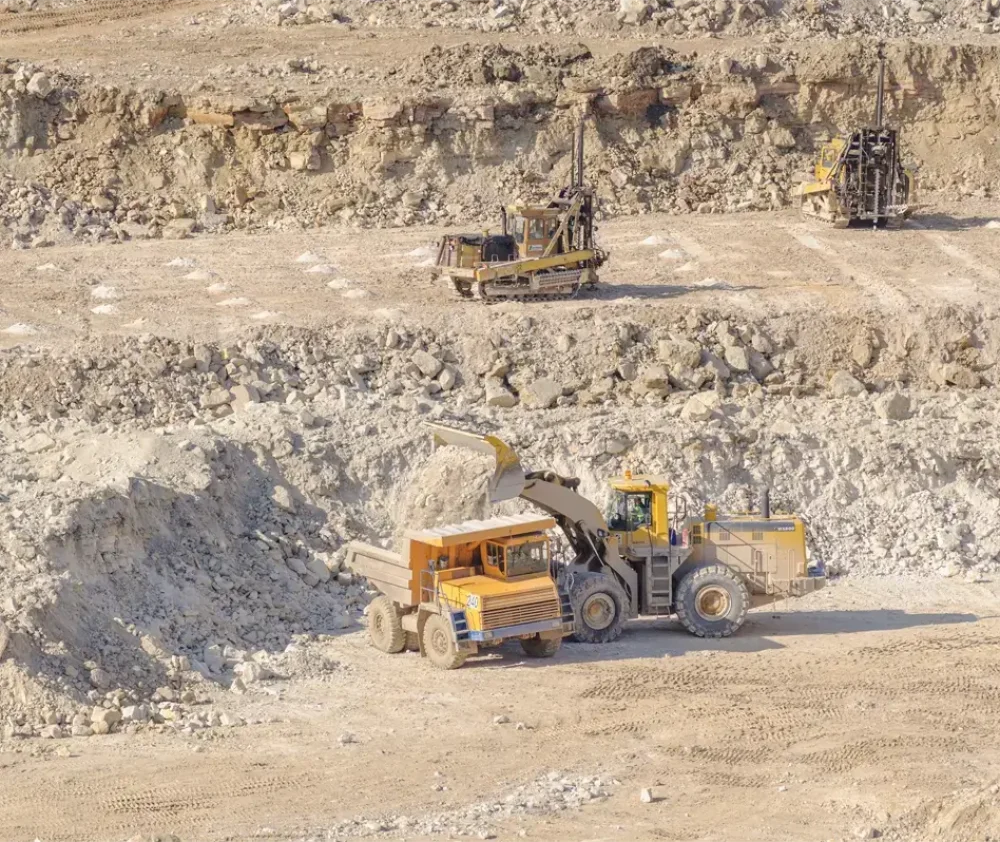
What do your home and Eagle County’s landscape have in common? From the walls in your home to the ground you are standing on, they all trace back to one unlikely source: gypsum. Gypsum has a rich history in the county and has played a big role in constructing the buildings and shaping the communities in the areas we call home.
What is gypsum?
Gypsum is a mineral made of calcium sulphate and water that forms primarily when seawater evaporates and leaves minerals behind. The chemical composition of gypsum allows it to be used for a variety of purposes, including fertilizer, plaster, drywall, and blackboard and sidewalk chalk. It is typically white, clear, or gray, and is so soft that you can scratch it with your fingernail! While gypsum is typically found as gray powdery rock, you can also find gypsum crystals, sometimes referred to as “desert rose” when the mineral forms around sand. Understanding what gypsum is and how it forms helps us appreciate its importance in our county, in natural landscape and human development.
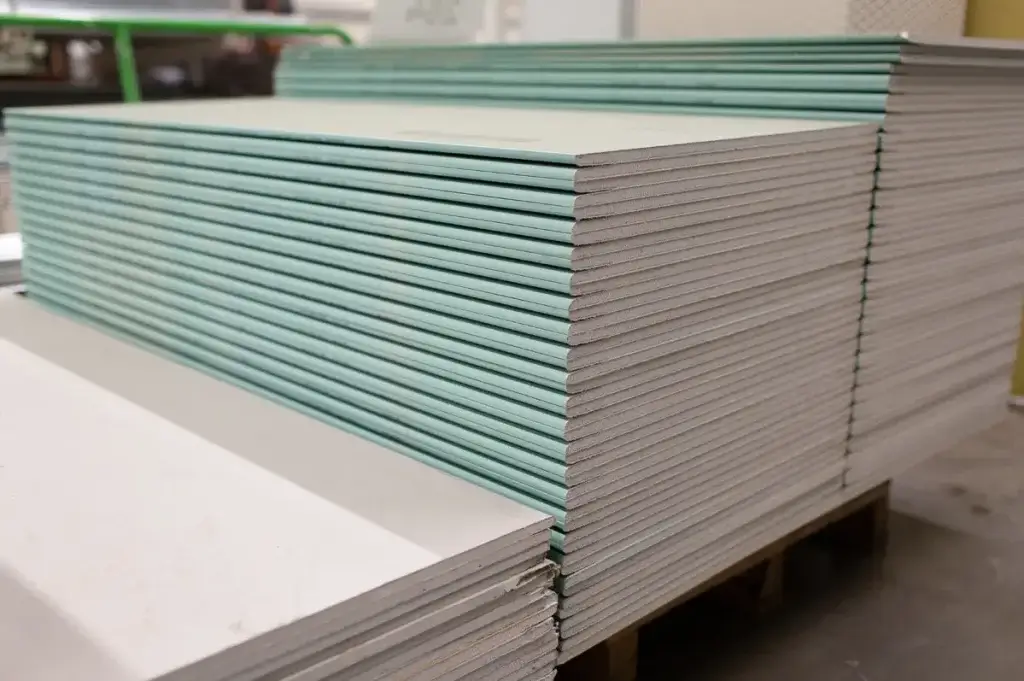
A pallet of drywall made from gypsum.
gypsum in eagle county
Way before Eagle County existed, our area of Colorado was submerged in the ocean. As the oceans evaporated, they left behind thick gypsum deposits. These deposits, also called the “Eagle Valley Evaporites,” are thousands of feet thick, which is why we still have bountiful reserves today. The town of Gypsum was originally settled in 1881, around the time the railroad industry started taking off. This facilitated the rise in gypsum mining from small and local businesses to industrial-scale production. As the area grew, so did the need for materials and resources. Gypsum became an integral part in plaster, cement, and drywall and helped in creating jobs, supported town growth, and connected the region to national construction markets.
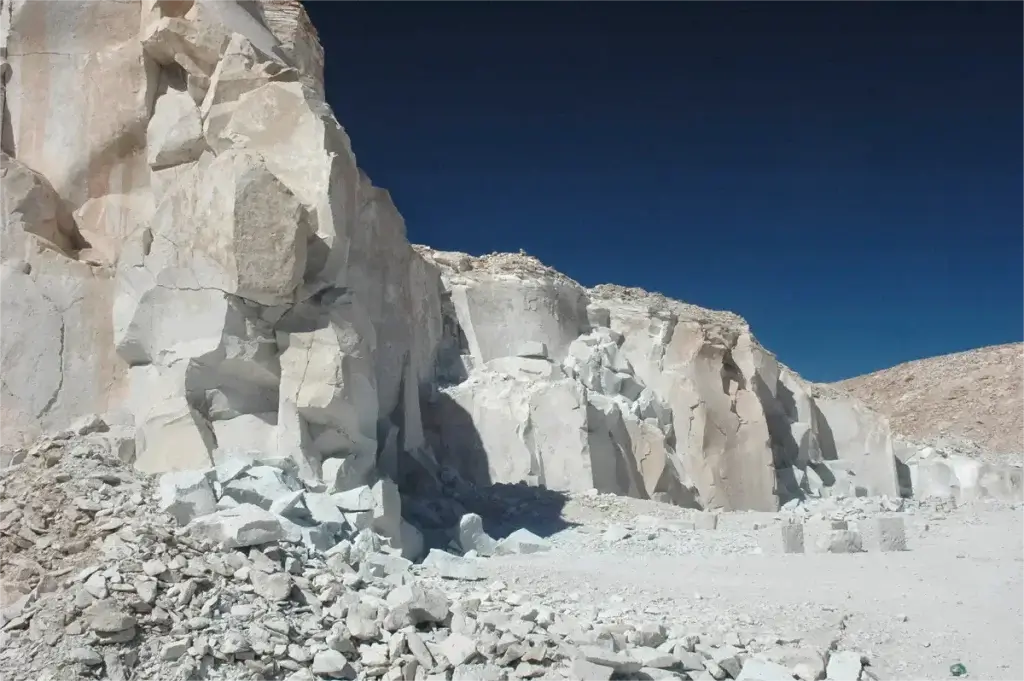
A pile of raw gypsum at a quarry.
modern day mining and impacts
Gypsum mining continues in the county today with modernized methods. Instead of using blasting, the rock can be grinded directly, making extraction a more efficient, controlled, and safe surface-mining operation. The gypsum mine is currently owned by American Gypsum LLC, and they continue to produce 600 million square feet of drywall annually. However, underneath the importance that gypsum has played in the development of Eagle County, it is easy for the environmental impacts to be forgotten. All resource extraction has an impact, but unlike many other minerals, the mining of gypsum does not involve toxic chemicals and produces fewer long-term contamination risks. Today, we see mining in Eagle County as a “managed” resource use that balances economic benefit and environmental protections, where we can be environmental stewards and benefit from the resources that have made the town of Gypsum and all of Eagle County what they are today.
From ancient oceans to modern homes, gypsum has quietly shaped life in Eagle County. It has built our walls and supported our economy, earning its place as the region’s “rock star.” However, its legacy comes with responsibility. As we continue to rely on this mineral, we must be conscious of balancing what we gain with how we protect the land it comes from. So next time you go for a walk, or hang up a new picture on your wall, remember the history beneath your feet, and how we can give back to the land that has provided for us.
Written by Piper Cobak. Piper Cobak is a Lead Naturalist at Walking Mountains and her favorite way to use drywall is to hang her finished puzzles.