
Master the art of campfire cooking in the White River National Forest! Learn why a safe fire is a good fire, how to build the perfect coal bed, and easy ways to level up your mountain kitchen.
There is something special that happens when you cook over an open flame. It could be the crisp Colorado air, or maybe things just taste better when they’re seasoned with a bit of woodsmoke. Either way I have found few better ways to spend an evening than huddling around a cooking fire with friends or family, filling up after a long day of camping. Today, let’s dive into how you can make your campsite into a fully functional outdoor kitchen.
Before we even think about logistics, let’s address the elephant in the room. We have had a record setting warm, dry winter that brings many questions about how our summer’s drought conditions will shape up. The very first and most important ingredient for a campfire is safety. Check for local fire restrictions and regulations before you even begin to think about packing the cooler.
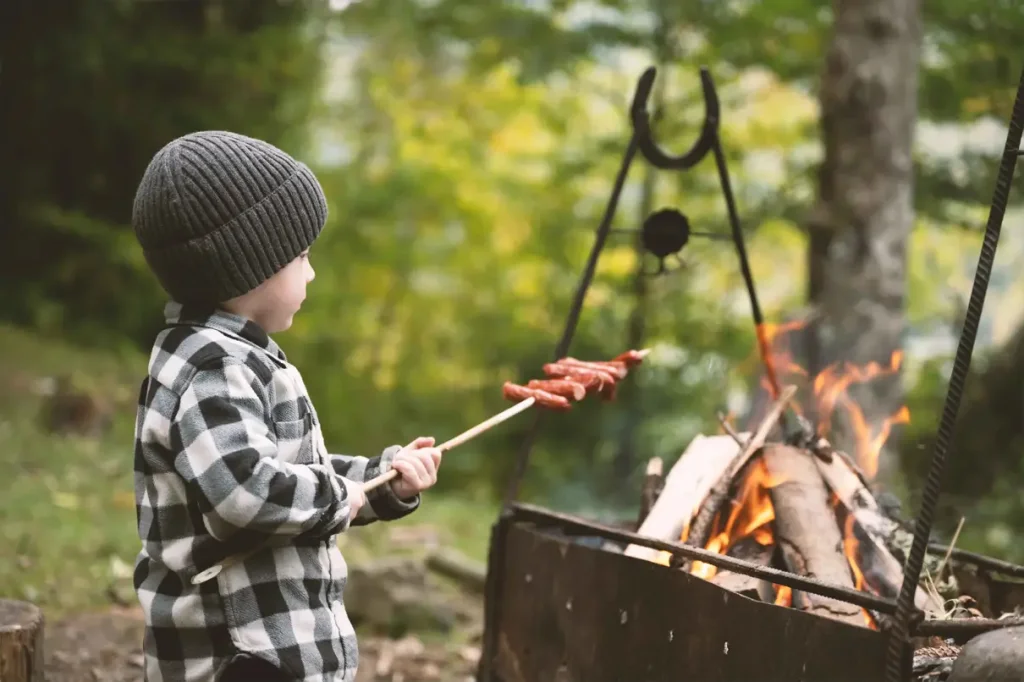
Cooking dinner over the campfire. 📷 Licensed from Adobe Stock
Now, having a great recipe and bringing the correct tools are both important, but let’s start where most people get it wrong: the fire itself. What really makes for a good cooking fire? The biggest mistake most of us make when hungry is trying to cook over the big, dancing flames of a campfire. Think back to the last time you roasted a marshmallow over an open flame. Many think the perfect spot is just far enough to prevent combustion of their treat. Really, flames are unpredictable: constantly moving, warming and cooling.
So how could you or I transform a roaring campfire into a controlled cooking space? The answer is patience and consistent heat. A brand-new fire is a bit too wild for cooking. When those first logs are catching, you’ve got a lot of tall, flickering flames that are great for light, but hard to cook over. The real magic happens once the fire burns for a while and the logs break down into a steady bed of glowing red coals. You can shovel a thick pile of coals to one side for a high-heat sear, or spread them thin on the other for a slow simmer. It turns a chaotic campfire into a multi-zone stovetop.
Let’s talk technique and equipment. Of course, there’s the classic weenie on a stick method. Timeless, iconic, this option can work great but also has its limitations. This one is great for hot dogs, marshmallows, or what I call campfire damper (try skewering a ball of biscuit dough on the end of a stick and roasting!) If you’re craving a little more of a rounded meal, bring your aluminium foil. Wrap some veggies, protein, spices, and oil together in a few layers of foil, toss the whole thing in the coals of the fire, and let it sit. For the heavyweight car campers out there: you can never go wrong with a cast iron skillet or a packable campfire grate for cooking.
The final step of the recipe is always the same, and it’s the most important one. The meal isn’t truly finished until the fire is entirely dead. In the high, dry air of Colorado, a fire that looks out is still a live threat. To protect our forests, we follow the Drown, Stir, and Drown rule. Pour water until the hissing stops, stir the ashes with a shovel, and soak it once more. If you can’t comfortably hold your hand over the ashes, it’s too hot to leave. Tending to the final embers of a campfire is more than just a safety precaution. It is a fundamental act of stewardship, ensuring that our privilege to enjoy the wild never comes at the cost of its destruction.
Andrew Craig is a naturalist at Walking Mountains. When not at the center, you can find him exploring the trails around Eagle County or sharing the best ways to enjoy our public lands responsibly.