Eagle County is experiencing one of its worst droughts on record. To conserve water, Eagle River Water and Sanitation District (ERWSD) asked residents to adhere to a two-day per week outdoor watering schedule. While indoor water usage returns 95% of water to creeks and rivers, outdoor water usage only returns 20-30% to local waterways. ERWSD’s efforts made a meaningful difference: total water usage decreased by 30% this summer thanks to community members decreasing their outdoor water usage by 48%!
Unfortunately, even with these worthwhile efforts, the future of water is uncertain. Local reservoirs have been tapped to very low levels, and it could take many average or above-average winter snowpacks to replenish their stores. As Coloradans confront this precedent, it’s dire that we embrace a multi-faceted approach to conserving water and sustaining its use.

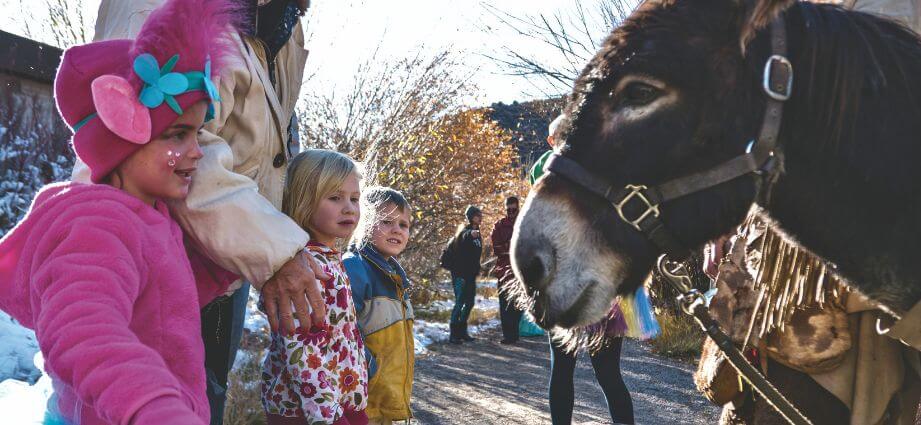
Red Sandstone 5th Graders search for pollinators in the Sweetwater Native Plant Garden
Native plants show us one of the approaches we can take to adapt to water scarcity. The past two years, I have had the joyful experience of helping Walking Mountains establish a Native Plant Garden at their Sweetwater Campus. The intentions of the garden were to increase pollinator habitat, restore ecological balance on disturbed land, create beauty, and deepen human-land relationships. All of these benefits have been outcomes of the project and are incredibly valuable reasons to plant native species, yet I have been most astonished by the outcome of plant resiliency amidst water reduction during this intense drought.
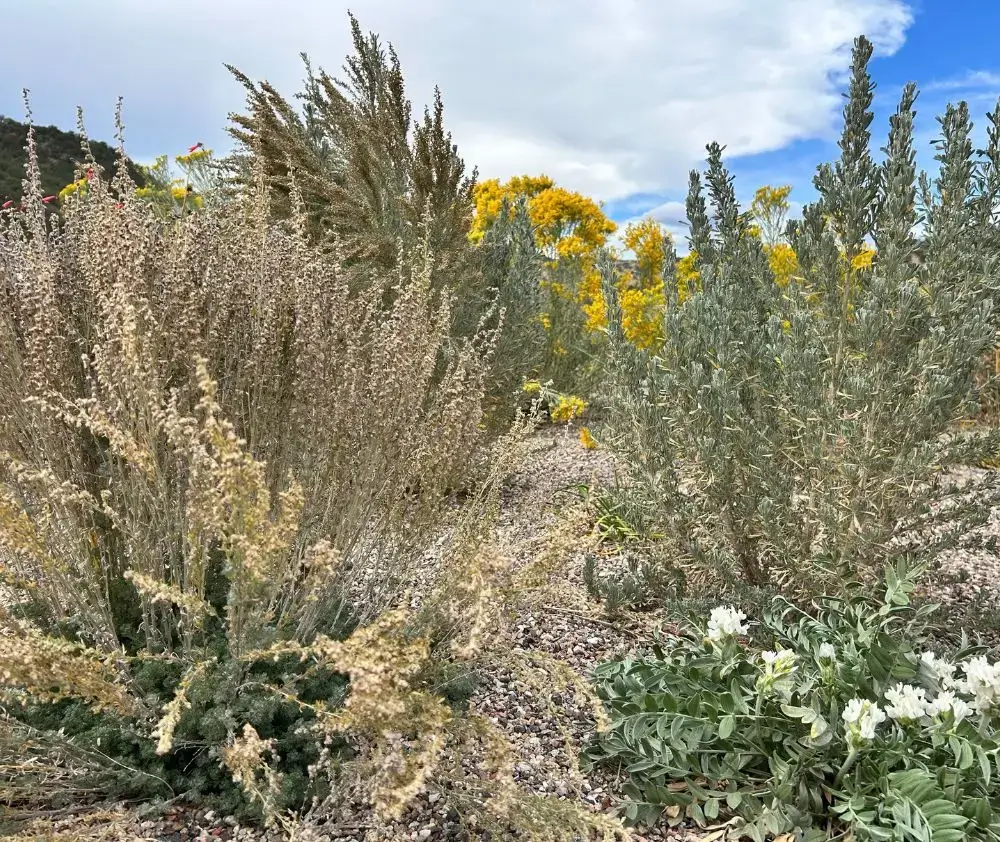
Sweetwater Native Plant Garden
While water conservation was in mind while conceptualizing the garden, experiencing an extreme drought was not. Initial water reduction strategies included laying 1-inch of compost plus a 4-inch layer of pea gravel to retain moisture in the soil. Sprinklers were converted to drip irrigation, which ran during the first fall to help plants establish and to distribute water efficiently. We planned to run the irrigation again the next spring, but upon hearing of the drought, decided not to run it at all in 2026. Still, the plants thrived. Most grew five to ten times their original size in the first year! Witnessing the adaptability of native plants in the Walking Mountains garden (and in my home gardens) has instilled a deep appreciation for the knowledge plants carry and has provided tangible examples for how we might meet the challenges of future droughts.

Oenothera elata (Tall Evening Primrose) blooming in the Walking Mountains garden at Sweetwater
I remember Cora Sperry (local native plant expert) telling me that if a plant can’t survive in her garden on a low-watering schedule, it doesn’t belong there. It reminds me of a concept learned during my Master Gardener coursework, ‘right plant, right place,’ which prompts gardeners to consider the natural factors present in a planting location to decide if the spot will meet the plant’s needs. Plants native to Eagle County have adapted over centuries to thrive in their native environment and carry wisdom to endure periods of drought. Establishing native plants in home and town landscapes can drastically reduce or completely eliminate the need to water lawns, gardens, and public spaces. To me, native plants are a crucial piece in the puzzle of conserving water: the sacred, life-giving resource we all depend on.
If you’re curious where to start or want to learn more, Eagle River Water and Sanitation District, Beyond Lawns, CSU Extension, Walking Mountains, Betty Ford Alpine Gardens, Eagle River Coalition, and Eagle County Conservation District are wonderful county/state organizations offering resources on planting native landscapes.
Written by Cassy Jo Brown. Cassy Jo is the Senior Manager of Youth Programs at Walking Mountains, a Colorado Master Gardener, and an Artist who believes nature is our greatest teacher.