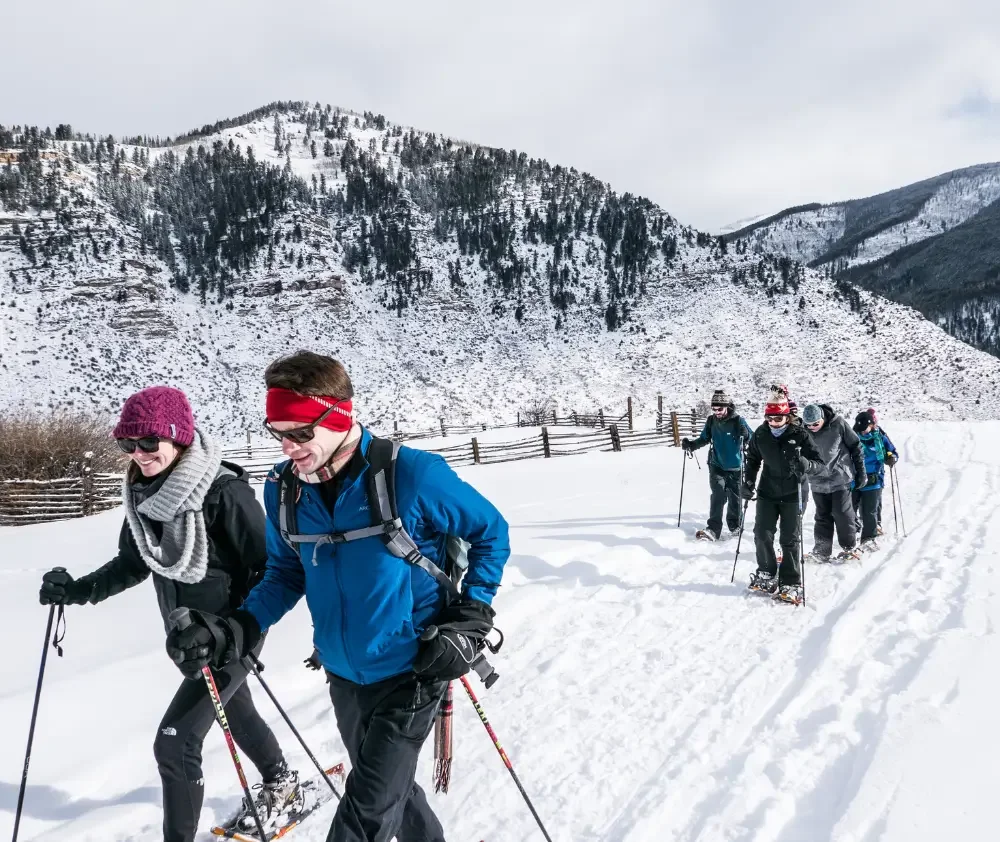
Over the past couple of years, snowshoeing has grown in popularity as one of the most accessible ways to recreate in the winter. Whether you are an experienced snowshoer or want to try it for the first time, knowing where to go, and where not to go, is important to stay safe this season.
There is no lack of great snowshoeing destinations in Eagle County. Grouse Creek, Maloit Park, and Tigiwon Road are all trails out of Minturn that are easily accessible and enjoyable for all skill levels. From the Grouse Creek trail in Minturn, snowshoers can create a variety of flexible loops for all distances and experience levels. The trail follows Grouse Creek through meadows and forests making it a great experience to see diverse winter landscapes. The whole trail is just under six miles total for more advanced snowshoers looking for a longer hike, but works great as an out and back at any distance.
Nearby, Maloit park offers a different experience ideal for beginners, families, or a relaxed half-day hike. The area has a variety of wide, flat loops that go through open fields and lightly wooded areas with great views of the surrounding cliffs. The gentle terrain makes it great to explore and enjoy beautiful winter scenery without long distances or elevation gain. For people looking for a more challenging hike, Tigiwon Road is a gradual uphill trail great for snowshoers looking for a steady workout without a steep ascent. As the trail progresses towards the Halfmoon Campground, mountain views can be seen through pine, spruce, and fir forests where you get expansive views and can soak in the intricacies of forested ecosystems.
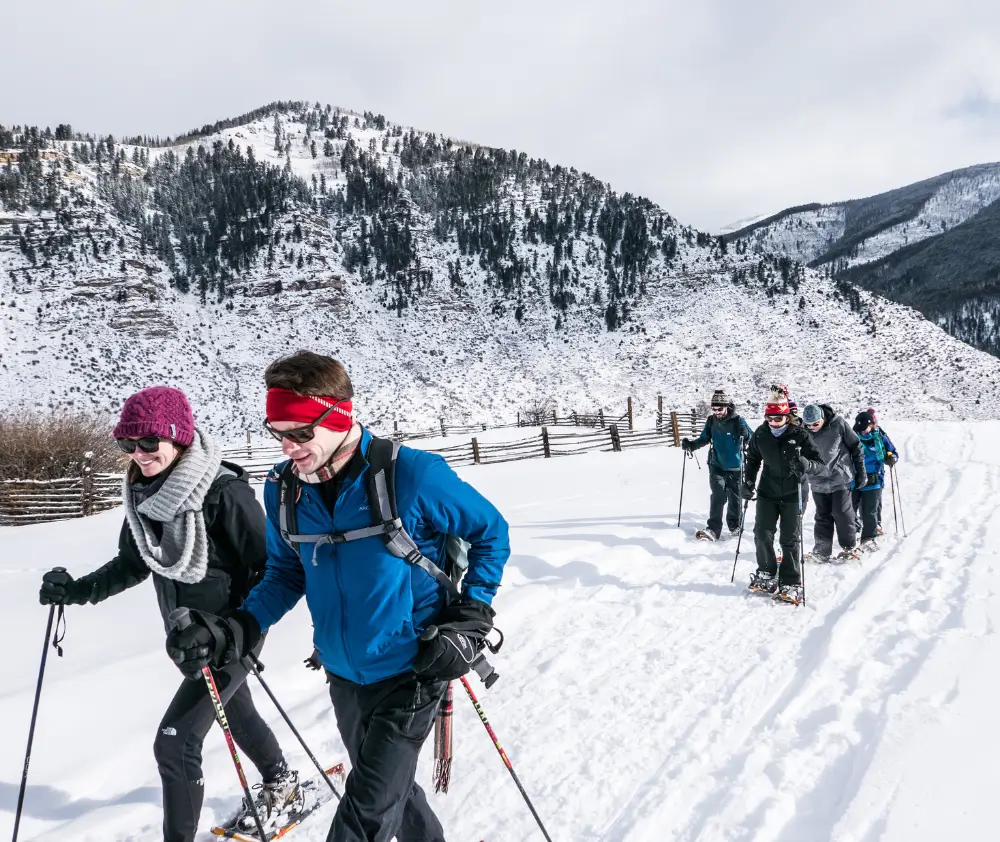
Backcountry snowshoeing with Walking Mountains at Meadow Mountain.
While these trails are generally safe for all skill levels, it is important to be aware of potential hazards in the backcountry. Avalanche safety is important for anyone recreating outside in winter, and recognizing risk zones is the first step in staying safe and out of avalanche terrain. Avalanches are most likely to occur on steeper slopes, around 30-55 degrees. Increased risk happens the higher up you go, usually open, steep terrain above treeline, but avalanches can travel into the flatter areas beneath these slopes. One way to avoid this is to stick to established, low-angle trails while snowshoeing. Before planning your trip, it is also helpful to check out The Colorado Avalanche Information Center to find out avalanche risk for the area you are planning to go, and forecasts for the next couple of days.
There are a couple more ways to be prepared for your snowshoeing adventure. Dress in layers to be ready for changing temperatures to avoid overheating or freezing, and wear waterproof winter boots to keep your feet warm. Make sure to bring extra water and food you might need for your hike, and tell someone the route you plan to take and your expected return time. While you enjoy your snowshoe experience, make sure it is an enjoyable experience for the wildlife too. Respect wildlife by staying around 150 ft away, stay on designated trails, and pack everything out so you leave no trace!
Snowshoeing is fun for everyone, but proper planning and awareness make it an even more enjoyable way to explore Eagle County in the winter. Plan smart, stay aware, and enjoy the Colorado winter one step at a time!
Piper Cobak is a Lead Naturalist at Walking Mountains.