How does a thin-skinned, cold-blooded creature survive a below freezing Colorado winter without a fur coat or a ticket south? Frogs, toads, and salamanders are all examples of amphibians, a cold-blooded and backboned animal that goes through an aquatic metamorphosis. These animals are born in the water with gills, then undergo an incredible biological transformation to live the rest of their lives on land. Colorado is home to many fascinating species of native amphibians, such as the boreal toad, wood frog, and the state amphibian: the western tiger salamander. Although active during the summer, our amphibians seem to disappear during the winter, so where do they all go?
Hibernation is a process in which an animal falls into a deep state of dormancy and slows its metabolic, breathing, and heart rates. Some mammals, such as bats, drastically lower their body temperature during hibernation and reach near-freezing temperatures. Mammals who undergo a lighter state of hibernation, called torpor, can wake up much more easily during the winter months because their bodies stay warmer. Torpor is what bears do to survive the cold temperatures, since they are too big to truly hibernate. Mama bears even give birth during torpor!
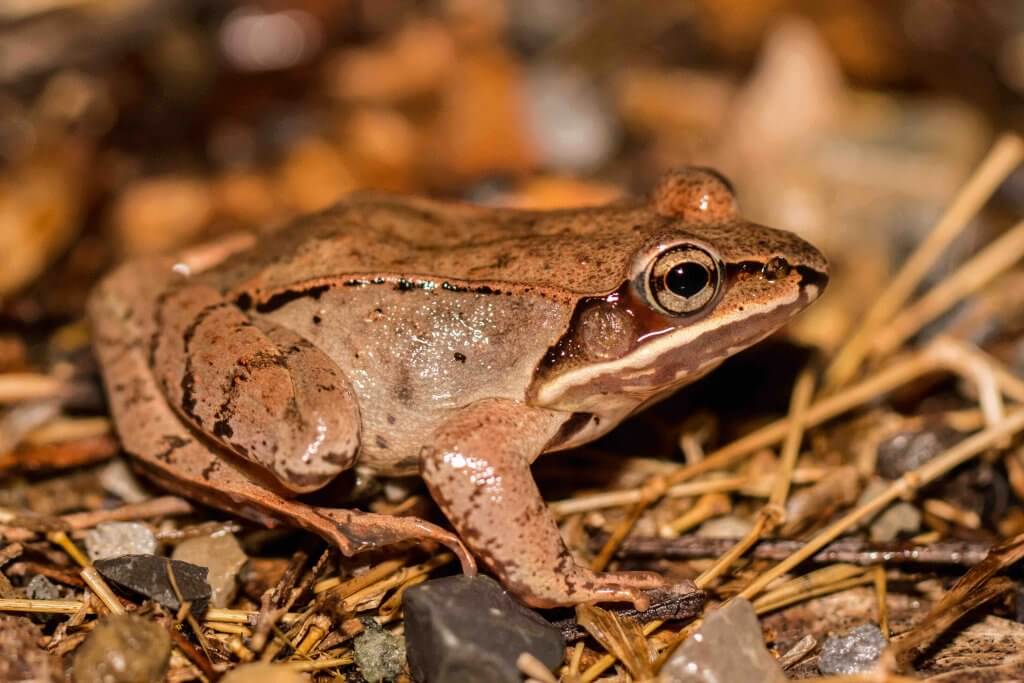
Still and watchful, a wood frog waits for winter, ready to enter suspended animation and survive months frozen in place. 📷 Licensed from Adobe Stock
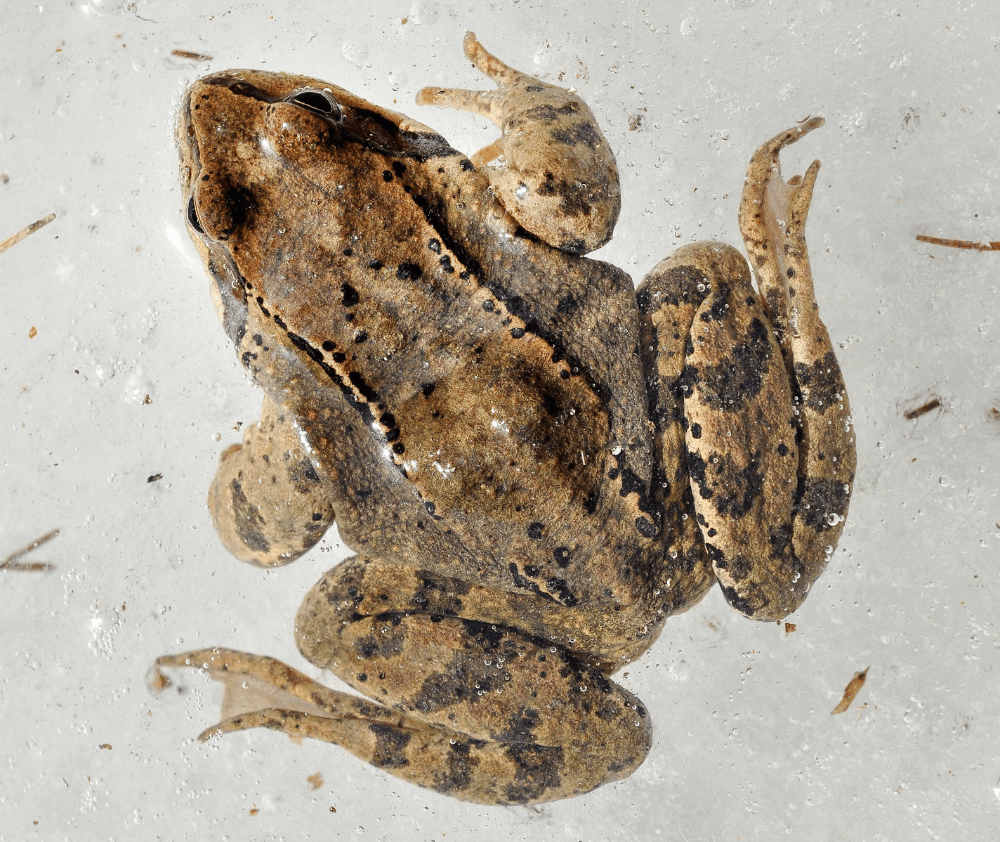
Many reptiles and amphibians undergo a process called brumation in the winter. Brumation is similar to hibernation, allowing cold-blooded animals to slow their bodily functions without harm. Most brumating animals will bury themselves in the ground below the frost line and occasionally wake up to drink water or to warm themselves in the sun. The wood frog defies these rules entirely, earning the nickname the most extreme brumator of the Rocky Mountains. These frogs are a widespread native amphibian species that are known for their extreme cold tolerance and ability to freeze solid. Internal ice formation is incredibly dangerous for any living organism. When water freezes inside most animals, jagged ice crystals form and expand within the cells, causing damage to delicate cell structures once the ice thaws. The wood frog, however, employs an ingenious strategy to combat this danger by putting themselves into a state of suspended animation.
These impressive animals spend their winter among the leaf litter above the soil, frozen solid, ceasing all brain, breathing, and heart activity for up to eight months! This strategy would be fatal to nearly every other organism, but it allows for the frog to save considerable energy and prevent catastrophic internal damage. Before the first winter freeze, the frog’s liver will start producing massive amounts of glucose. This sugar acts as a natural anti-freeze, allowing water molecules to bind inside cells without icing over.

📷 Licensed from Adobe Stock
Once the ice melts in the spring, the wood frog thaws from the inside out. Because they spend their winters on the surface rather than buried deep underground, these frogs get an early jump on mating season. They use nearby snowmelt ponds to lay up to 3,000 eggs, giving their offspring a vital head start in the short Colorado growing season. Scientists still aren’t sure what cues a wood frog’s heart to start beating again, or why the frogs don’t form blood clots after stopping blood circulation for so long. But one thing’s for sure– these frogs are the toughest brumators around.
Meridith Carley is a current Naturalist at Walking Mountains Science Center and she has been working as an environmental educator for three years. She has previously taught on Nantucket Island and in Savannah, GA educating all ages about the plants and animals of each unique ecosystem, as well as caring for reptile and amphibian ambassador animals. Her favorite amphibian is the black rain frog!