

Have you ever bitten into a Colorado peach from a roadside stand or farmers market and been met with a burst of flavor? If you’ve wondered why Palisade peaches are so consistently delicious year after year, western Colorado’s long sunny days and cool nights are only part of the process. Behind every perfectly ripe peach is a carefully cultivated tree. Through asexual reproduction, farmers can grow fruit trees that reliably produce fruit with prized qualities such as exceptional flavor, ideal tree size, and strong disease resistance.
Plants reproduce in two main ways: sexual and asexual reproduction. While both create new plants of the same species, they can produce very different results. Sexual reproduction requires the genetic information of two parent plants, one from the male and the other female. When these cells combine through fertilization, they form a seed that grows into a genetically unique plant. Like siblings in a family, no two seedlings are exactly alike. One peach tree grown from seed may produce large, juicy fruit, while another could grow small, bitter rocks. This genetic diversity helps plant species adapt to changing environments and survive diseases, but it also makes the outcome of the plant unpredictable. If you plant a pit at home, your tree probably won’t turn out as tasty as the fruit it came from.
Asexual reproduction, on the other hand, uses the genetics of only one parent plant to create a clone. Instead of mixing DNA from two plants, growers reproduce a plant from one of its own living parts. Because no new genetic combinations are created, every new plant shares the same characteristics as the original. A common agricultural method of asexual reproduction is grafting.
Grafting is the technique most commonly used for woody fruit trees, including peach trees. There are multiple methods for grafting including whip grafting, cleft grafting, bark grafting and bud grafting, all of which include the process of fusing two living plants into one.
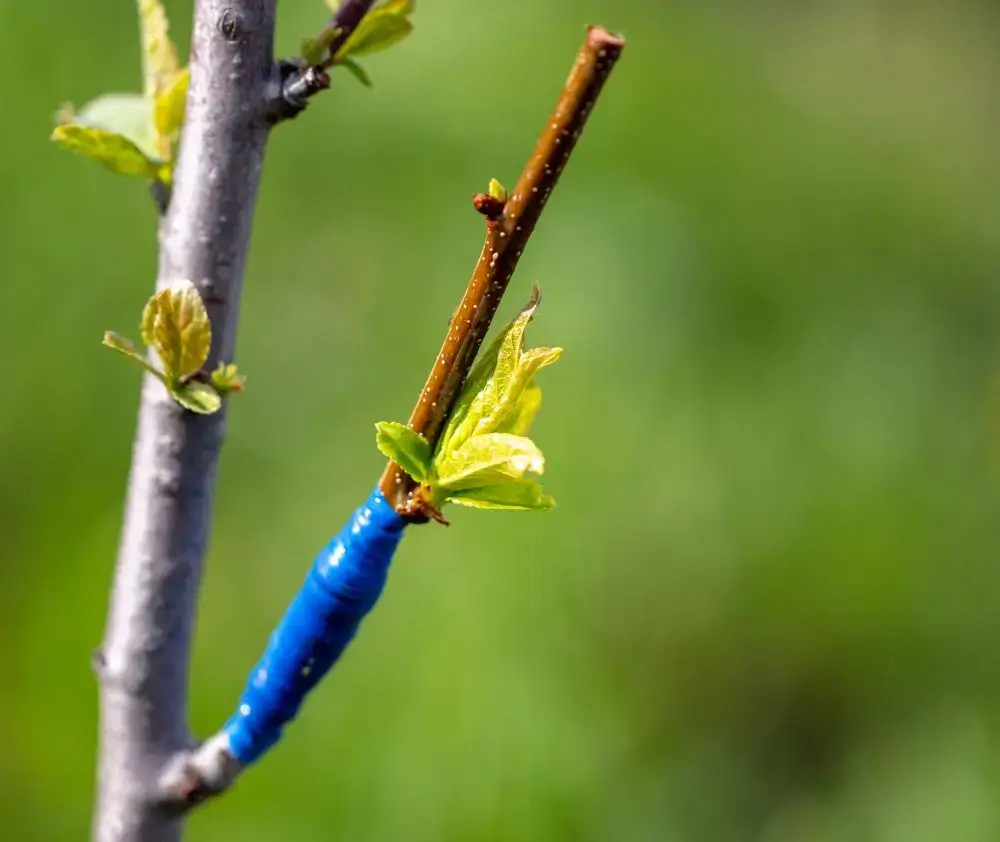
A close-up look at grafting: the process of fusing two living fruit trees into one.
📷 Licensed from Adobe Stock.
The method used to graft a plant is decided based on the time of the year, the size of the materials being grafted, and preference.
Every graft needs a scion and rootstock. The top part of the graft, called the scion, is cut from the tree with the desirable fruit and attached to the rootstock of another compatible tree. The rootstock provides a sturdy foundation with roots adapted to local soil conditions, pests, and climate, while the scion determines the fruit’s flavor. For the graft to succeed, the thin green layer of tissue underneath bark, the cambium, of each plant must be perfectly aligned. As the tissues heal and grow together, they form a single healthy tree with all of your favorite traits. This process is how the Palisade peaches return each summer with the same unforgettable taste.
Grafting can also be used to create a single tree that produces multiple types of fruit. By attaching branches, or scions, from different compatible trees to the same rootstock, growers can cultivate a tree with several kinds of fruits growing from separate branches. For these grafts to succeed, all varieties must be closely related, such as an all apple or pear tree. Multi-grafted trees are extremely useful for those with small urban gardens, where space is limited for growing multiple trees.
Through grafting, growers don’t have to leave the quality of their crops to chance. Instead, they preserve the best traits that make the plants exceptional and ensure that every bite of a Palisade peach delivers the same delicious taste that keeps people coming back to Colorado markets.
Jada Dachtler is a Naturalist at Walking Mountains who loves to enjoy local fruits in the summer!